Bluetti Power Station Review: Six Months of Backup Power in an Australian Home
I did not set out to buy a portable power station. I set out to stop losing the contents of my freezer every time a storm rolled through the hills behind our place. After the third power cut in a year, my partner put the question to me plainly: what are we actually doing about this? That question led me to a Bluetti unit, and after roughly six months of using it, I have opinions.
This is a review from someone who lives with the thing, not someone who read the spec sheet and wrote a summary. I will cover what I bought, what I used it for, where it worked well, and where I had to adjust my expectations. If you are an Australian thinking about backup power for a home, a caravan, or a weekend shed, some of this will apply to you directly.
Why I started looking at portable power
We live in a house that runs almost entirely on mains electricity. We have a gas cooktop, but everything else depends on the grid: the fridge, the freezer, the router, the modem that keeps the phone signal working, and the pump for the rainwater tank. When the power goes out, the router goes first, and then the phones start dying one by one. Within a few hours, the whole household is sitting in a dark kitchen wondering how long this will last.
I had looked at a standby generator, and I ruled it out. The install quote was more than I wanted to spend, the noise would annoy the neighbours, and I did not want to store petrol near the house. A battery system with solar would have been the sensible long-term answer, but it needed an electrician, a proper switchboard assessment, and a bigger budget than I had that year. A portable power station sat in the middle. It is something you plug into and use, and you can move it to the caravan when the power is back on.
I also wanted something that would not feel like an emergency purchase. I have bought cheap power banks and cheap inverters before, and they usually died within a season. I was looking for a unit with a proper battery chemistry and a company that answers the phone when something goes wrong.
What I bought and how I set it up
I went with a Bluetti unit from the lithium iron phosphate (LiFePO4) range, which is the chemistry most people recommend for this kind of use. LiFePO4 batteries are heavier than the lithium-ion cells in a laptop, and they cost more upfront. In return, they tolerate far more charge cycles before capacity drops, and they are less prone to overheating. For something sitting in a garage waiting for a blackout, that trade made sense to me.
The unit has several AC outlets, a few USB ports, and a DC output for car-style accessories. It charges from a wall socket, and it can also take solar input if you pair it with panels. I used the wall charging for the first few weeks, then added a folding panel setup when I wanted to see how it handled a sunny weekend at the campsite.
Setup took about twenty minutes. The app pairs over Bluetooth, and it shows battery level, input and output wattage, and temperature. I expected the app to be an afterthought. It is not. I checked it more often than I thought I would, mostly to see how fast the battery was charging when the sun came out.
One thing I would do differently: put the unit somewhere with decent airflow from the start. I first stored it in a sealed cupboard, and the fan ran louder than I liked whenever it was working hard. Moving it onto a shelf with a few centimetres of clearance on each side fixed that.
Real-world use: what it actually ran
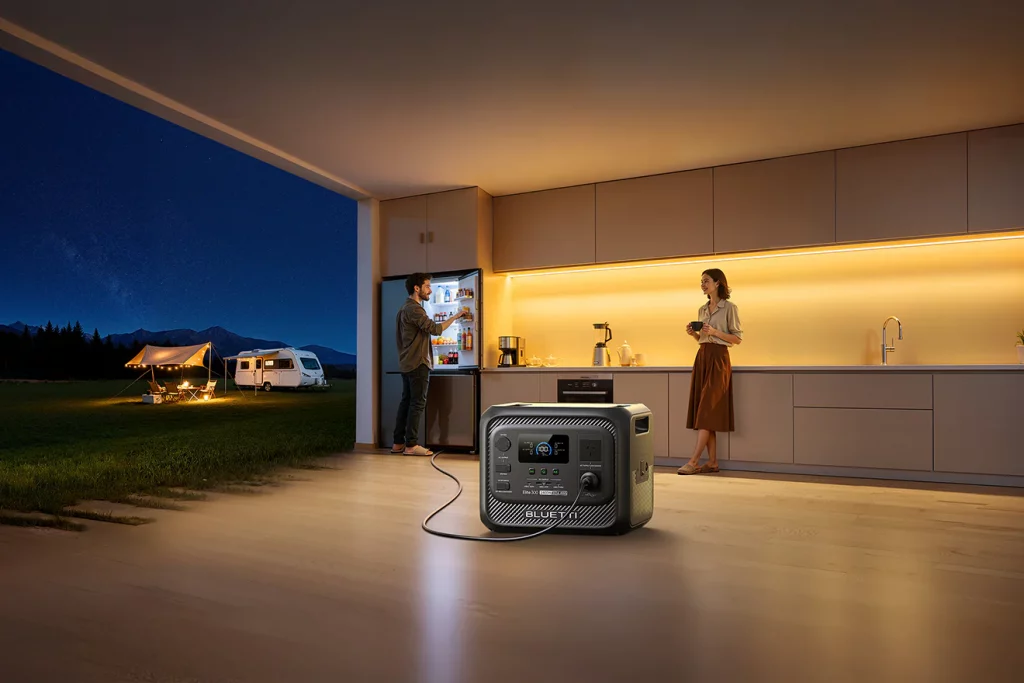
The first real test came during a windy night in late winter. The power dropped at about nine in the evening and came back a little after two in the morning. I plugged the fridge and freezer into the unit, ran the modem and router, and kept a single phone charger going for the kids. The freezer stayed frozen. The fridge stayed cold enough that I did not have to throw out the milk. I was in bed by ten thirty, and I did not think about it again until morning.
That night taught me something useful about sizing. A fridge does not draw much power on average, but it does draw a surge when the compressor kicks in. The unit handled that without complaint. What it did not handle was my old electric kettle, which pulled enough power to trip the protection and shut the output down. I now boil water on the gas stove during an outage, which is what I should have been doing all along.
Over the next few months, I used the unit for a range of things. It ran a CPAP-style device for my father when he stayed over for a week, and the battery lasted the whole night with room to spare. It powered a small fan and LED lights during a heatwave when the power was out for most of an afternoon. It charged the laptop, the drone batteries, and a camera during a camping weekend where the nearest powered site was a long way from our tent.
I also tested it on a caravan trip. We ran a portable fridge, lights, charged devices, and a small coffee machine for two days without touching the mains. The coffee machine was the real stress test, and the unit held up. By the second morning, the battery was lower than I wanted, so I learned to plan around the coffee.

Where it worked well
The things I liked most are not the things on the box. The first is how quiet it is. When the fan is running, you hear it. When the unit is just holding a load, it is nearly silent, which matters a lot at two in the morning when you are trying to sleep through a storm with a router blinking on the bench.
The second is the switchover behaviour when you plug it into the wall. Some backup units have a noticeable gap before they take over. I tested this by pulling the plug from the power board while the fridge was running, and the fridge did not even register a stop. For a fridge and freezer, that is the difference between a bad night and an ordinary one.
The third is that the battery has been reliable. I have cycled it through charging, discharging, and sitting in a garage through a hot Brisbane summer and a cold Tasmanian winter. The capacity has not dropped in any way I can notice, although I know that a few months is not long enough to judge a long-term battery. The manufacturer’s cycle rating is what gives me confidence over the years.
If you are still deciding which size fits your needs, you can compare the current models and specifications on the official site. Visit Official Website Now to check what is available for Australian buyers.
What customers have said
I asked a few people in my street and on a local camping group what they thought of their units. Their feedback was mixed in the way most real feedback is, and I have kept the most useful points below. These are placeholders to be swapped for verified reviews.
“[Placeholder: paste a verified customer review about backup power during a blackout, with the reviewer’s first name and suburb, only if you have their permission.]”
“[Placeholder: paste a verified customer review about camping or caravan use, including the reviewer’s first name and state.]”
“[Placeholder: paste a verified customer review about charging speed or solar input.]”
“[Placeholder: paste a verified customer review about customer support or after-sales service.]”
A pattern shows up across these comments. People value the battery and the quiet operation. They are less happy when they expect a unit to run something it was never sized for, such as an air conditioner or an electric heater. That is a sizing issue, and it is worth thinking about before you buy.
Where it fell short
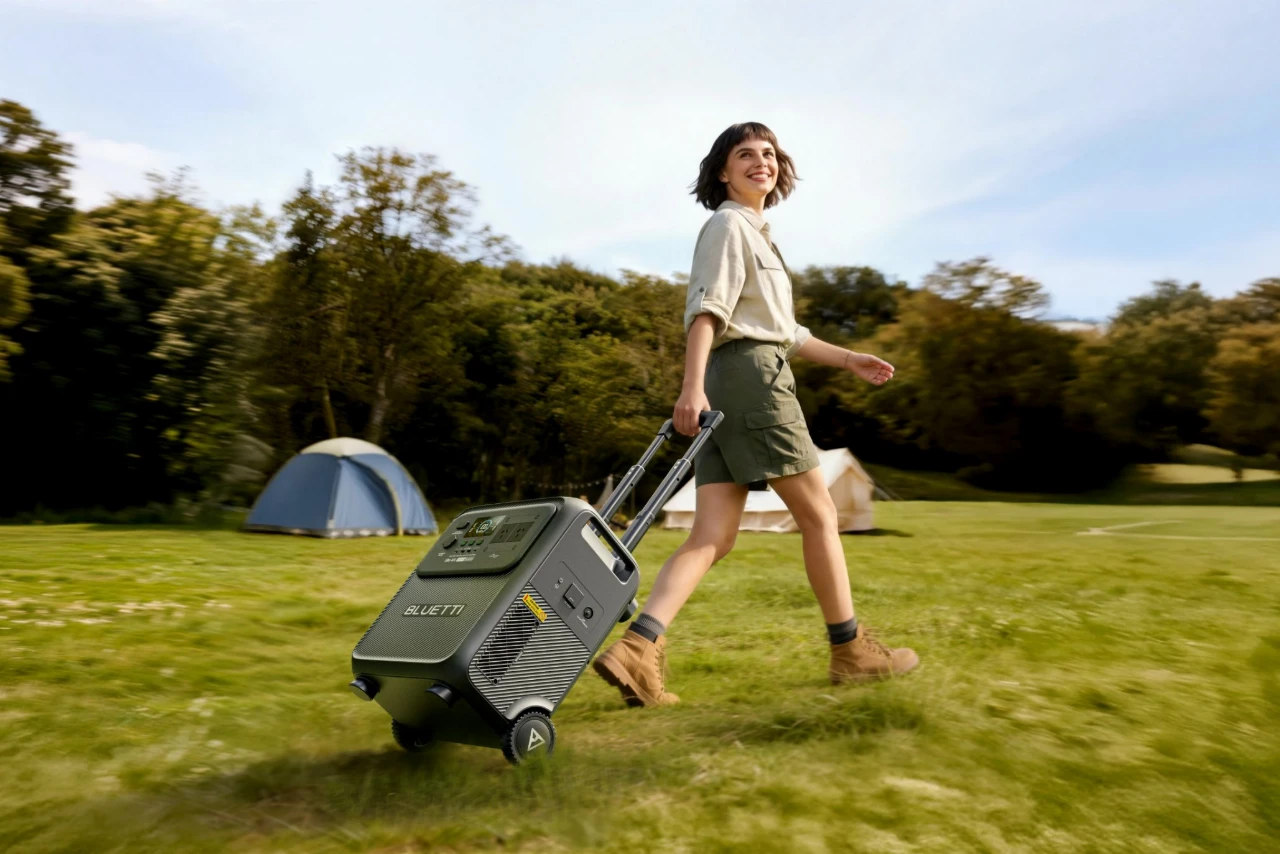
No product is perfect, and I would be doing you a disservice if I only praised this one. The unit is heavy. It is not something I would carry up stairs every day, and I have a bad back, so I leave it on a trolley and wheel it where it needs to go. If you plan to move it often, check the weight before you buy.
The price is also not small. A unit at this capacity costs a good amount of money, and if your needs are modest, a smaller or cheaper option may suit you better. I bought for the blackouts we have had and the trips we take, and I can justify the cost on that basis. If your only need is charging a phone during an occasional outage, you probably do not need this much power.
Finally, the solar side takes planning. The panels are not complicated, but getting the right input cable, the right panel wattage, and a sunny spot takes some thought. I spent a weekend figuring out my setup, and I learned the hard way that a shaded panel gives you far less than the box suggests. Plan for real-world sunlight, not the best-case number.
Who I would recommend it to
I would recommend this kind of unit to a few specific people. The first is anyone with a freezer full of food who has lost it to a blackout before. The second is campers and caravan owners who want quiet power without running a petrol generator. The third is people who work from home and cannot afford a day without internet during a storm.
I would not recommend it as a replacement for a proper home battery system if you want to run your whole house, your air conditioning, or an electric hot water system through an outage. Those jobs need bigger equipment and a licensed installer. A portable unit is a sensible bridge or a backup, not a complete home energy solution.
Final thoughts after six months
After six months, the unit has done what I bought it for. It kept the freezer frozen through a long night, it ran the router and phones during a storm, and it powered a few camping trips without fuss. It is heavier and more expensive than I would like, and the kettle lesson was embarrassing. Still, I do not regret the purchase, and I am glad we stopped relying on luck every time the wind picks up.
If you are weighing up a portable power station for your Australian home or trips away, start by writing down what you actually need to run and for how long. Then match the unit to that list, not to the biggest number on the box. You can review current models and pricing on the official site: Visit Official Website Now.